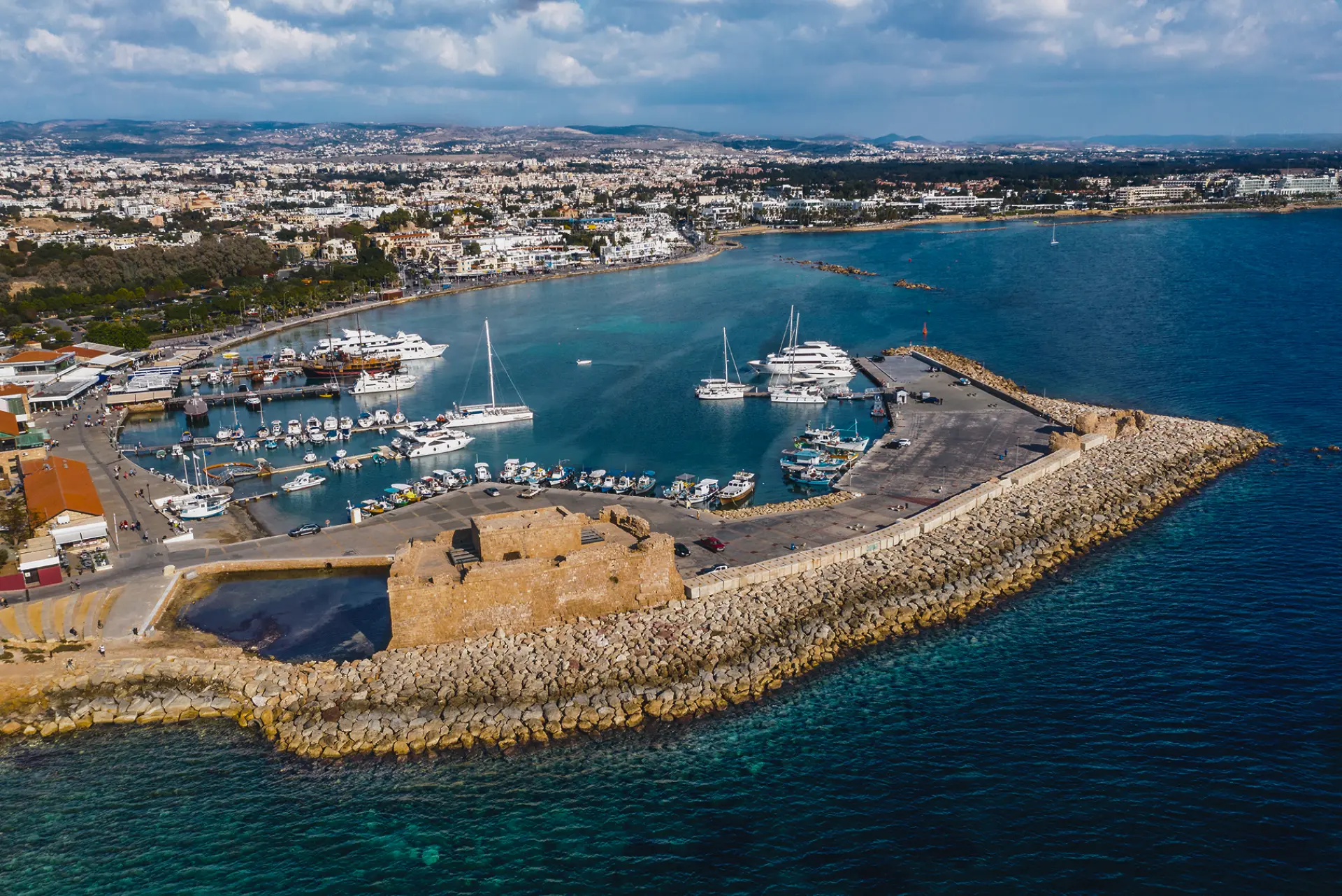
Explore life in Paphos, Cyprus: the best areas to live, property and rental considerations, transport, schools, healthcare, beaches and what to know before moving.
Paphos is often described as Cyprus’s quieter alternative to Limassol, but that comparison only tells part of the story. The city brings together a UNESCO-listed archaeological landscape, a working town centre, a busy coastal tourism district, established residential neighbourhoods and villages that stretch from Geroskipou to Chloraka, Tala, Kissonerga and Peyia.
For residents, the appeal is less about big-city intensity and more about balance. You can live close to the harbour and walk to restaurants and archaeological sites, choose an apartment in a practical central neighbourhood such as Universal, settle into the local rhythm of Geroskipou, or move uphill for more space and sea views. The trade-off is that daily life becomes more car-dependent as you move away from the central coastal areas.
Paphos is also a changing property market. The Central Bank of Cyprus recorded annual growth of 9.6% in its district-wide residential property price index in the second quarter of 2026. The increase was not uniform: apartment prices rose much faster than house prices. These are index movements, not a promise of future growth or a measure of prices in any individual neighbourhood.
Paphos can suit families, retirees, remote workers and people who value the sea, history and outdoor life. It can also appeal to property buyers, but the right choice depends on the exact location, the condition and legal status of the property, and the kind of everyday routine you want.
Location | Southwestern coast of Cyprus |
Atmosphere | Historic coastal city, resort and residential center |
Best suited to | Families, retirees, remote workers, lifestyle-oriented expats |
Property | Apartments, townhouses and villas; rapidly rising apartment index in 2026 |
Cost of living | Generally below Limassol in secondary market guides, but housing costs are rising |
Car | Optional in the most walkable central areas; recommended in most outer suburbs and villages |
Climate | Mediterranean, with long dry summers and mild, wetter winters |
Airport | Paphos International Airport serves the region directly |
One important distinction: “Paphos” can mean the city, the wider urban area or the entire district. Statistics and property-market figures should always be read with that geography in mind.
Families can combine suburban housing with schools, beaches, sports and access to public and private healthcare. The International School of Paphos is one established English-language option, with education from early years through secondary level. Before choosing a home, check the school location, admissions, fees and daily route. A house in Tala or Peyia may look close on a map but can mean a significant amount of driving for school and activities.
Paphos has a long-established international community, and English is widely usable in tourism, property and many private services. That can make the first months easier, although learning some Greek helps with everyday errands and makes it easier to connect with local life beyond the international-resident community.
Paphos can work well if your job is location-independent. Central and coastal neighbourhoods offer cafés and services, while the suburbs provide larger homes and access to outdoor activities. It is a different proposition for people who need a large local corporate job market: Limassol has a stronger concentration of international business, shipping and corporate employers.
Tourism, hospitality, construction, real estate and services related to residents and visitors are important parts of the local economy. People seeking work in these sectors may find opportunities, but anyone planning a corporate career should research actual vacancies and salaries before relocating. A lifestyle fit does not automatically mean a strong employment fit.
The latest Central Bank index shows that residential prices in Paphos district rose 9.6% year on year in Q2 2026, with apartment prices rising faster than houses. This confirms recent price momentum, not guaranteed future returns. Performance varies by property, street, building quality, purchase price, running costs and rental demand. Treat projected yields and future infrastructure benefits with caution.
In Paphos, history is not confined to a museum district. Ancient remains sit alongside modern streets, the harbour and the everyday city. UNESCO’s Paphos World Heritage property, inscribed in 1980, includes archaeological remains at Kato Paphos and Palaepaphos near the village of Kouklia. The sites are closely associated with the ancient worship of Aphrodite and include villas, mosaics, tombs and the remains of the sanctuary.
The mosaics of Nea Paphos are among the best-known features of the archaeological park. The Tombs of the Kings, despite their name, were monumental rock-cut burial sites used for high-ranking officials and aristocrats rather than kings. Further east, Kouklia preserves remains associated with ancient Palaepaphos and the Sanctuary of Aphrodite.
The city’s contemporary identity also draws on this heritage. Paphos was a European Capital of Culture in 2017, with a programme that linked archaeology, architecture, public space and contemporary cultural activity. This layering gives the city a distinctive feel: the harbour is not simply a restaurant strip with an archaeological attraction nearby; the modern visitor district and the ancient city overlap.
Paphos sits on Cyprus’s southwestern coast. The central urban area stretches from the lower town by the sea towards the upper town, while the wider residential area extends east to Geroskipou and northwest through Chloraka and Kissonerga towards Peyia and Coral Bay. Inland villages such as Tala offer a different setting again, often with elevated views and a more residential feel.
For practical purposes, it helps to think of Paphos in three broad layers:
Kato Paphos: the lower coastal town, with the harbour, restaurants, hotels, archaeological sites and visitor-oriented streets.
Ktima (Upper Paphos): the civic and commercial centre, with a more local everyday rhythm.
The wider residential belt: areas such as Universal, Geroskipou and Chloraka, plus hillside and village communities including Tala, Kissonerga and Peyia.
Two homes advertised as being in Paphos can offer very different routines. One may be walkable to the harbour; another may offer a terrace and a sea view but require a car for most errands. Check the exact address rather than relying on the area name alone.
Paphos has a Mediterranean climate, with long, dry summers and mild winters when most rainfall occurs. Spring and autumn are often comfortable seasons for walking, viewing properties and exploring the surrounding countryside.
A mild winter does not mean heating is irrelevant. Insulation, window quality, orientation, damp control and heating systems can make a substantial difference to comfort and energy bills. In summer, air conditioning, shade and ventilation matter just as much. When viewing a property, assess the building itself as carefully as the view.
Paphos has several personalities. Around the harbour, it feels like a Mediterranean holiday destination: excursion boats, restaurants, hotels and visitors share the waterfront with the archaeological park and castle. Ktima feels more like a working town centre. Geroskipou has its own local identity, while Tala and other inland communities offer a quieter hillside setting.
That is why describing the whole area as “quiet” can be misleading. Kato Paphos and Coral Bay can be busy in peak season. The broader advantage over a larger city is the relatively easy access to countryside, coastal walks, villages and outdoor activities.
Central Paphos and the larger suburbs have supermarkets, bakeries, pharmacies, cafés, restaurants, gyms and other everyday services. But convenience varies street by street. Before committing to a property, test the routine you expect to have: walk to a supermarket, check parking, try the route to work or school, and visit at different times of day.
Pafos Buses operates urban, district and airport services. Routes 612 and 613 connect Paphos with the airport and are listed by the operator as year-round services. Routes, timetables and holiday schedules can change, so check the official operator’s journey planner before relying on a particular connection.
Living without a car is most realistic if you choose a walkable part of Kato Paphos and organise your routine around the central coastal area. A car becomes much more useful in Tala, Peyia, Emba and many other outer or hillside locations, as well as for trips into the countryside and along the western coast.
For a short visit focused on the harbour and archaeological sites, walking and buses may be enough. For permanent life, school runs, regular shopping or exploring villages, the answer depends on where you live and how often you travel.
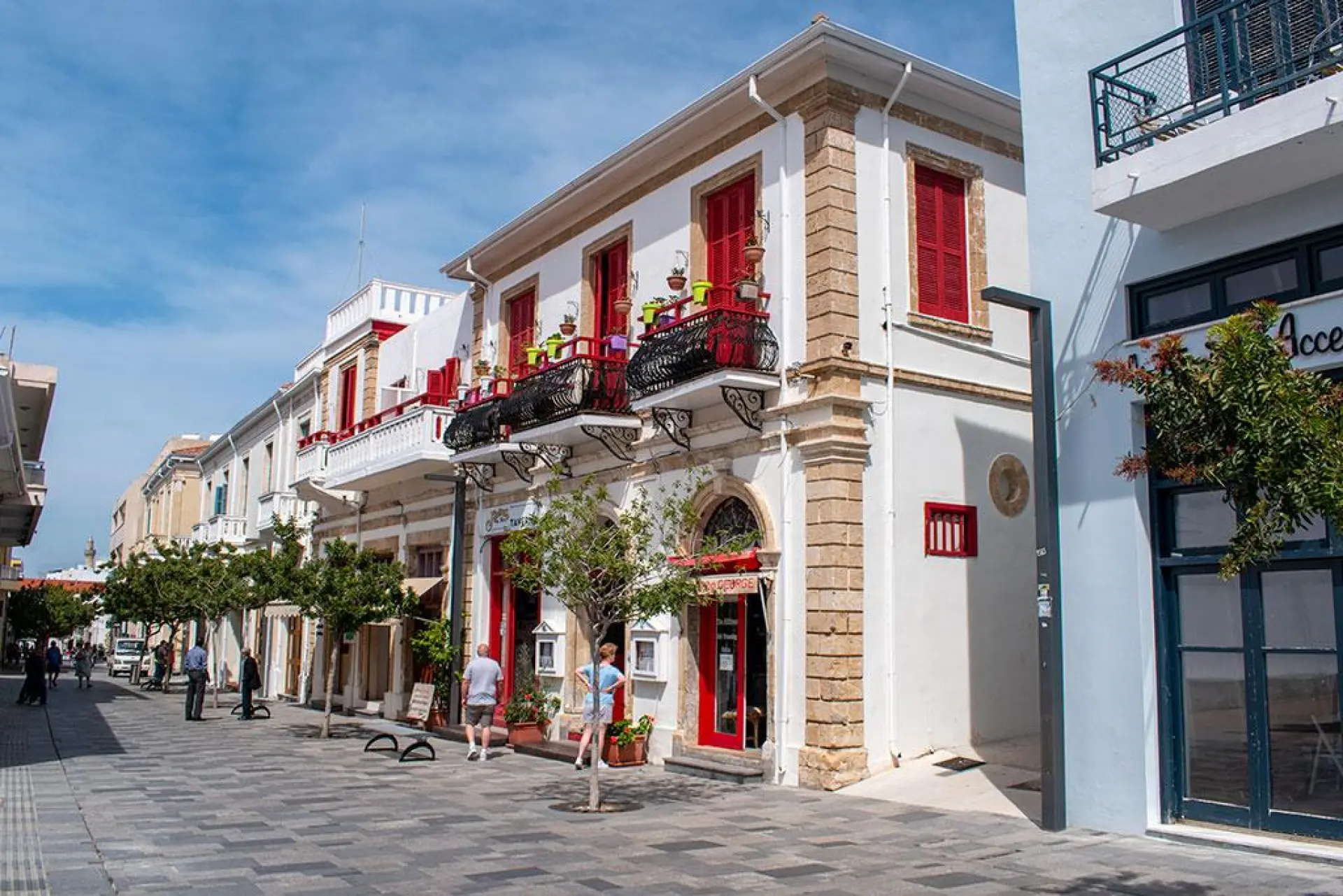
Paphos does not have one universally agreed list of neighbourhoods. Some names refer to city districts, others to municipalities or villages that now form part of the wider urban area. Choose by lifestyle, transport, school routes, parking, noise and access to the sea—not by prestige alone.
Area | Character | Indicative 2026 long-term rent | Proximity to sea | Key amenities |
|---|---|---|---|---|
Ktima / Upper Paphos | Local, historic, civic and commercial | Mid-range; exact range unspecified | Inland, short drive | Market area, cafés, municipal services, cultural spaces |
Kato Paphos | Walkable, lively, tourist-oriented | 1-bed €800-1,000; 2-bed €1,100-1,350 | On the coast | Harbour, restaurants, archaeological park, buses |
Universal | Practical, apartment-heavy residential area | 1-bed €750-950; 2-bed €950-1,150 | Short walk/drive depending on address | Apartments, shops, access to upper and lower town |
Tombs of the Kings | Coastal urban corridor near major archaeological site | 2-bed €1,000-1,400 | Coastal | Archaeology, shops, bus station, restaurants |
Geroskipou | Local, family-oriented, practical | 1-bed €750-950; 2-bed €950-1,150 | Village center inland; coast a short drive | Shops, schools, hospital access, traditional square |
Chloraka | Mixed village, residential and coastal development | 1-bed €750-950 | Parts of area reach the coast | Supermarkets, restaurants, coastal access, route toward Coral Bay |
Tala | Quiet hillside village with views | 1-bed €900-1,500; 2-bed €1,100-1,600 | Drive to coast | Village square, restaurants, community amenities, hillside villas |
Peyia / Coral Bay | Resort coast plus hillside residential town | 1-bed €1,200-1,600; villas roughly €2,000-4,000 | Coral Bay is beachfront | Sandy beach, restaurants, shops, resort services |
*Indicative rents: Expats Cyprus, updated July 2026. Area character and coastal context are also supported by official Pafos regional tourism material and Visit Cyprus.
Best for: people who want a more local, everyday town rather than a resort setting.
Ktima is the upper town and civic-commercial centre. Housing includes older apartments and houses, renovated properties and some newer development. Shops, cafés, municipal services and cultural spaces support day-to-day life. The trade-off is that it is not a beachfront neighbourhood, and older buildings vary in condition. Inspect maintenance, insulation, parking and accessibility carefully.
Best for: people who prioritise walkability, restaurants, archaeology and the waterfront.
Kato Paphos is the lower town around the harbour and archaeological park. It offers apartments, holiday-oriented complexes and newer projects alongside older flats. The harbour, castle, restaurants and archaeological sites are close by, making this one of the easiest parts of Paphos for a car-light lifestyle. In return, expect more visitors and activity in high season; parking, noise and building quality vary by street.
Best for: renters, couples and residents looking for a practical apartment location between upper and lower Paphos.
Universal is a largely residential, apartment-oriented area with convenient access to different parts of town. It is less defined by historic character than Ktima or the harbour, but can be a practical base for everyday life. Walkability depends on the exact address, and buyers or tenants should check communal fees, parking and the condition of shared facilities.
Best for: people who want a coastal urban address with transport links, slightly away from the harbour itself.
This corridor combines residential blocks, hotels, shops and visitor facilities near the archaeological site of the Tombs of the Kings. It provides access to the coast and routes north towards Chloraka and Coral Bay. The main road can be busy, and an address in the area does not necessarily mean direct sea frontage. Check road noise and the actual walking route to the waterfront.
Best for: families and people who prioritise everyday convenience over resort atmosphere.
Geroskipou is an established town east of central Paphos, with its own centre, shops and residential streets. Housing includes apartments, family homes and newer developments. It can be a practical option for access to the eastern side of the city and the airport corridor. Most homes are not directly on a classic sandy beach, so this is more of a local suburban choice than a harbour-front lifestyle.
Best for: residents who want to live between central Paphos and the Coral Bay corridor.
Chloraka combines an older village core with modern residential and coastal development. Property ranges from apartments to houses and villas. Its position can be convenient for reaching Paphos or travelling northwest, but the area is spread out. The exact street determines how easily you can walk to shops, bus stops or the coast.
Best for: people who value space, a hillside setting and views more than walking to the beach.
Tala is an established hillside community with houses, villas and some apartments. Many locations offer elevated views and a quieter residential environment. The trade-off is the terrain and distance from the coast: a car is useful for most errands, and steep roads can affect everyday convenience. Visit the property at different times and check the drive to schools, shops and work.
Best for: beach-focused residents, families and people looking for a house or villa outside central Paphos.
Peyia is a hillside town with a substantial residential community, while Coral Bay is more strongly associated with the resort coast. Coral Bay Beach is a well-known sandy beach with shallow water and visitor facilities; it is about 500 metres long according to Visit Cyprus. The area offers apartments, houses and villas, but central Paphos is farther away and summer can be busy. Do not treat Peyia and Coral Bay as interchangeable: the exact address changes the distance to the beach and the amount of driving needed.
Best for: people considering the coastal belt northwest of Paphos who want to compare residential settings beyond the main city.
Kissonerga lies along the route between Chloraka and Peyia and includes residential and coastal development. As with other dispersed communities, convenience varies considerably by location. Check access to shops, public transport and the coast, and do not assume that a sea view means easy beach access.
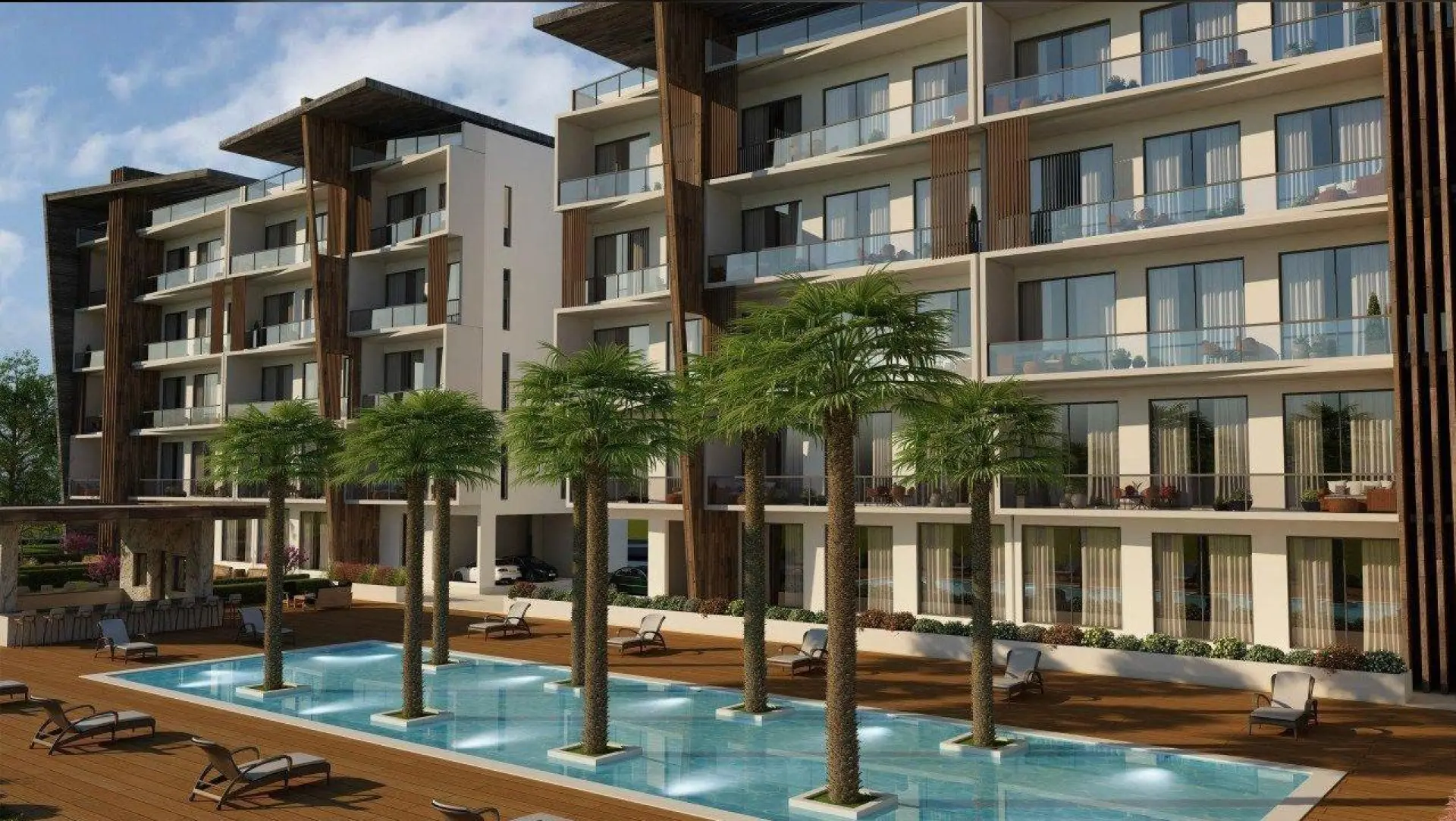
Paphos offers a broad mix of property: central apartments and older homes, suburban family houses, townhouses, villas and new-build developments across the wider district. Location, building quality, title and planning status, communal fees and transport needs can matter as much as the headline price.
The Central Bank of Cyprus’s Residential Property Price Index is a more reliable guide to market direction than individual asking prices. It is based on valuation data supplied by participating credit institutions and independent valuers. In Q2 2026, the annual residential price index for Paphos district rose 9.6%. The index showed annual growth of about 18.5% for apartments and 3.1% for houses. These figures describe measured price movements across the district; they are not neighbourhood-level averages and do not predict future returns.
The Central Bank also reported 1,073 sales contracts in Paphos district in Q2 2026 across property types. Its breakdown showed approximately 34% domestic buyers, 25% buyers from other EU countries and 41% buyers from outside the EU. This illustrates the importance of international demand, but the figures cover the district and are not limited to residential apartments or houses.
There is no authoritative official dataset giving reliable average purchase prices or long-term rents for every Paphos neighbourhood. Online rent ranges should therefore be treated as indicative asking-price snapshots, not verified transaction averages. Before making a decision, compare current listings for similar properties, verify what is included in the rent, and check whether communal charges, utilities or maintenance are additional.
For buyers, due diligence matters more than a general claim that an area is “up-and-coming.” Inspect the property at different times of day, compare resale and new-build options, understand communal fees, and independently verify title, planning and legal status through the appropriate professionals and the Department of Lands and Surveys. Treat proposed infrastructure projects as uncertain until their status and delivery are confirmed.
There is no single official 2026 household-cost figure that captures the range of lifestyles across Paphos. Housing is usually the biggest variable. A central apartment, a family home in Geroskipou and a villa near Coral Bay can involve very different budgets.
Beyond rent or mortgage payments, allow for electricity—especially air conditioning—car ownership, fuel, apartment communal charges, private education where relevant, insurance and maintenance. Dining and leisure costs also vary between everyday local businesses and venues focused on visitors. It is safer to budget for the life you actually intend to live than to rely on the idea that Cyprus is universally inexpensive.
Recent official price-index growth also means older anecdotes about Paphos as an invariably cheap property market may no longer be a useful guide. Compare actual properties and total monthly costs before deciding.
Tourism, hospitality, construction, property and services supporting residents and visitors are important parts of the Paphos economy. The city also benefits from its airport, coastal attractions and cultural heritage. However, the local corporate job market is narrower than Limassol’s concentration of international business, shipping and related professional services.
For remote workers, freelancers, tourism entrepreneurs and people bringing income with them, Paphos can be an appealing base. For anyone relying on local employment, research current vacancies, salaries and commuting options before moving.
Families have public and private education options, including English-language schooling. The International School of Paphos is an established private school offering education from early years through secondary level. Neapolis University Pafos is also based in the city.
School fees, admissions requirements, waiting lists, curricula and transport arrangements can change. Verify details directly with each institution. It is often sensible to shortlist schools before signing a long lease, then choose a neighbourhood around the daily journey rather than the other way around.
Paphos has public and private healthcare services. Eligible residents can access Cyprus’s General Healthcare System (GeSY) according to its rules, while private clinics and specialists provide additional options. Paphos General Hospital is the principal public hospital serving the district.
Healthcare needs differ, so check whether the services and specialists you require are available locally and confirm eligibility and registration arrangements directly with the relevant providers. Do not choose a neighbourhood on the assumption that every specialty or treatment is available nearby.
This is where Paphos has an unusually strong hand. Unlike a resort where the historical excursion is something you drive to once, some of Cyprus’s most important archaeological remains sit directly beside the modern city.
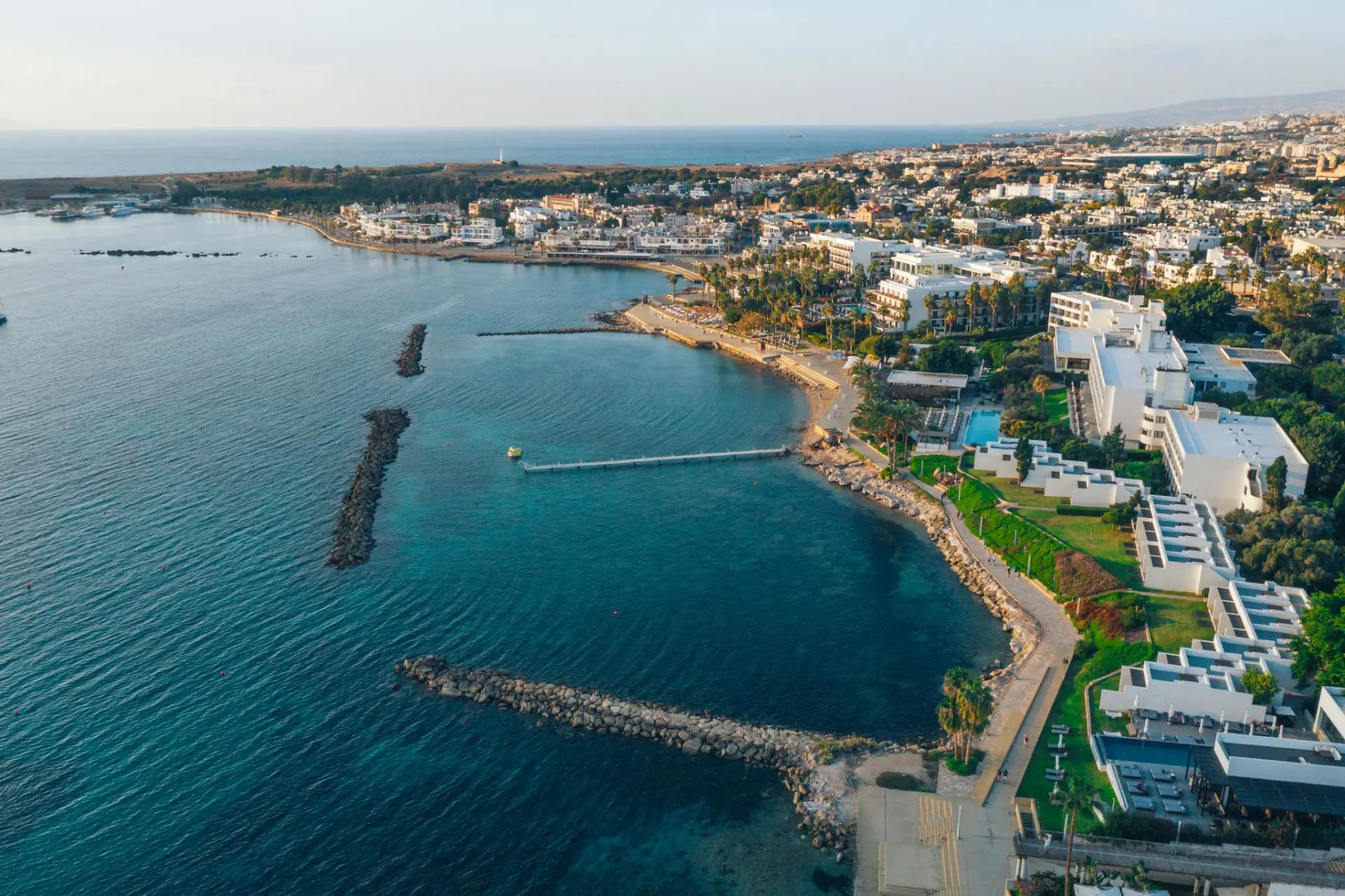
Paphos offers coastal walks, rocky shorelines and organised beaches, but “near the sea” does not necessarily mean “within walking distance of a sandy swimming beach.” Coral Bay is one of the region’s best-known sandy beaches, with facilities and shallow water that make it popular with families. Laourou is another organised beach in the area. Check seasonal lifeguard coverage and local swimming conditions before entering the water.
The harbour and seafront in Kato Paphos bring together boats, restaurants, pedestrians, castle views and nearby archaeological sites. It is a natural place for an evening walk and one of the parts of town where daily life can be organised without a car.
Upper Paphos offers a different perspective, with local shops, civic spaces and cultural venues. At the harbour, the compact medieval castle is one of the city’s most recognisable landmarks and a natural endpoint for a walk along the waterfront.
The Paphos Archaeological Park, the Tombs of the Kings and the remains at Kouklia are central to the region’s identity. The Roman mosaics and ancient remains are part of the UNESCO-listed property. Geroskipou is known for the Byzantine church of Agia Paraskevi, while Petra tou Romiou, traditionally associated with the myth of Aphrodite’s birth, lies along the coast east of Paphos.
Paphos has a historic harbour, but it should not be confused with a completed large-scale marina and residential district like Limassol Marina. The long-discussed Potima marina project near Kissonerga has been the subject of development proposals and reporting. Unless an official update confirms completion and operation, it should be treated as a proposed project rather than an existing amenity when assessing a property.
Paphos is a well-established destination for residents and visitors, but ordinary precautions still matter. Pay attention to road safety, summer heat, wildfire conditions and sea conditions. In hot weather, carry water when visiting archaeological sites, use sun protection and check local advice before hiking or swimming. Conditions and official travel guidance can change, so consult current information before travelling.
When choosing a home, inspect access roads, lighting, parking, building maintenance and the route to everyday services. If you are considering a property in a remote or hillside location, test the journey at the times you expect to travel.
✅ History and the sea are part of everyday life, with major archaeological sites close to the modern city.
✅ A wide choice of settings, from walkable coastal apartments to suburban family homes and hillside villas.
✅ Access to beaches, villages and countryside across western Cyprus.
✅ An international airport and year-round airport bus connections.
✅ Public and private healthcare options and English-language education choices.
⚠️ A car becomes much more useful in outer suburbs and hillside villages.
⚠️ The local corporate job market is narrower than Limassol’s.
⚠️ Coastal and resort areas can be busy during peak season.
⚠️ Property prices have been rising, and asking prices vary widely by location and building quality.
⚠️ A coastal address does not always mean a sandy beach or easy walk to the waterfront.
⚠️ Proposed future infrastructure should not be treated as guaranteed.
Paphos is a strong option for people who want history, sea, a smaller urban footprint and easy access to western Cyprus. It can be particularly attractive to remote workers, retirees and families whose income does not depend on the island’s largest corporate job market.
Limassol may suit people who prioritise international business, corporate employment and a larger modern urban environment, although housing costs and traffic can be significant considerations. Larnaca offers a coastal lifestyle with access to the island’s main international airport, while Nicosia is more relevant to people whose work or studies are tied to government, administration, professional services or universities.
The most useful question is not which city is best in the abstract, but what you want an ordinary weekday to look like. If it includes a walk by the sea, a manageable drive across town, time outdoors and no need to be close to a major corporate district, Paphos may be a good fit.
It depends mainly on housing and location. Some residential areas may offer lower costs than comparable parts of Limassol, while premium coastal properties and villas can be expensive. Compare current listings and total monthly expenses rather than relying on a citywide average.
It is possible if you choose a walkable central area, especially around Kato Paphos, and plan your routine around available bus services. A car is much more useful in outer suburbs and hillside villages. Check the current route map and timetable before deciding.
Greek is the principal local language. English is widely used in tourism, hospitality and many services catering to international residents. Learning some Greek is helpful for longer-term integration.
It can be, with schools, healthcare, sports, beaches and a range of residential settings. Choose the school and neighbourhood together, and check the daily transport routine before signing a lease or buying a home.
Spring and autumn are generally comfortable for exploring the city and viewing properties. For a permanent move, visit a prospective neighbourhood at different times of year if possible: a quiet street in winter may be busier during the summer season.
There is no universal answer. The Central Bank’s Q2 2026 index recorded annual growth in Paphos district, especially for apartments, but past growth does not guarantee future returns. Assess the purchase price, legal status, building quality, running costs, rental demand and resale prospects of the individual property.
Coral Bay is in the wider Paphos region, near Peyia, rather than in the central harbour district. The distance from a particular property to the beach and to central Paphos depends on its exact location.
Paphos is easiest to understand when you stop expecting it to be a smaller version of Limassol. Its strengths come from a different combination: extraordinary archaeology, a human-scale urban centre, the sea, established residential communities, an international population, an airport and countryside close to the city.
There are trade-offs. The job market is narrower than Limassol’s, outer neighbourhoods can be car-dependent, coastal areas become busier in summer, and the old assumption that Paphos is uniformly inexpensive no longer reflects the changing property market.
For people who value history, outdoor life and a gentler pace, Paphos remains a compelling place to consider. The key is choosing the right version of it: a walkable apartment near the harbour, a practical home in Geroskipou, a residential address in Chloraka, a hillside terrace in Tala or a property near the sandy coast around Coral Bay.


Already have a place in mind? Take the next step and explore homes available across Cyprus.
Browse apartments, houses and new developments, explore properties on the map and compare your favourites to find the right fit.
