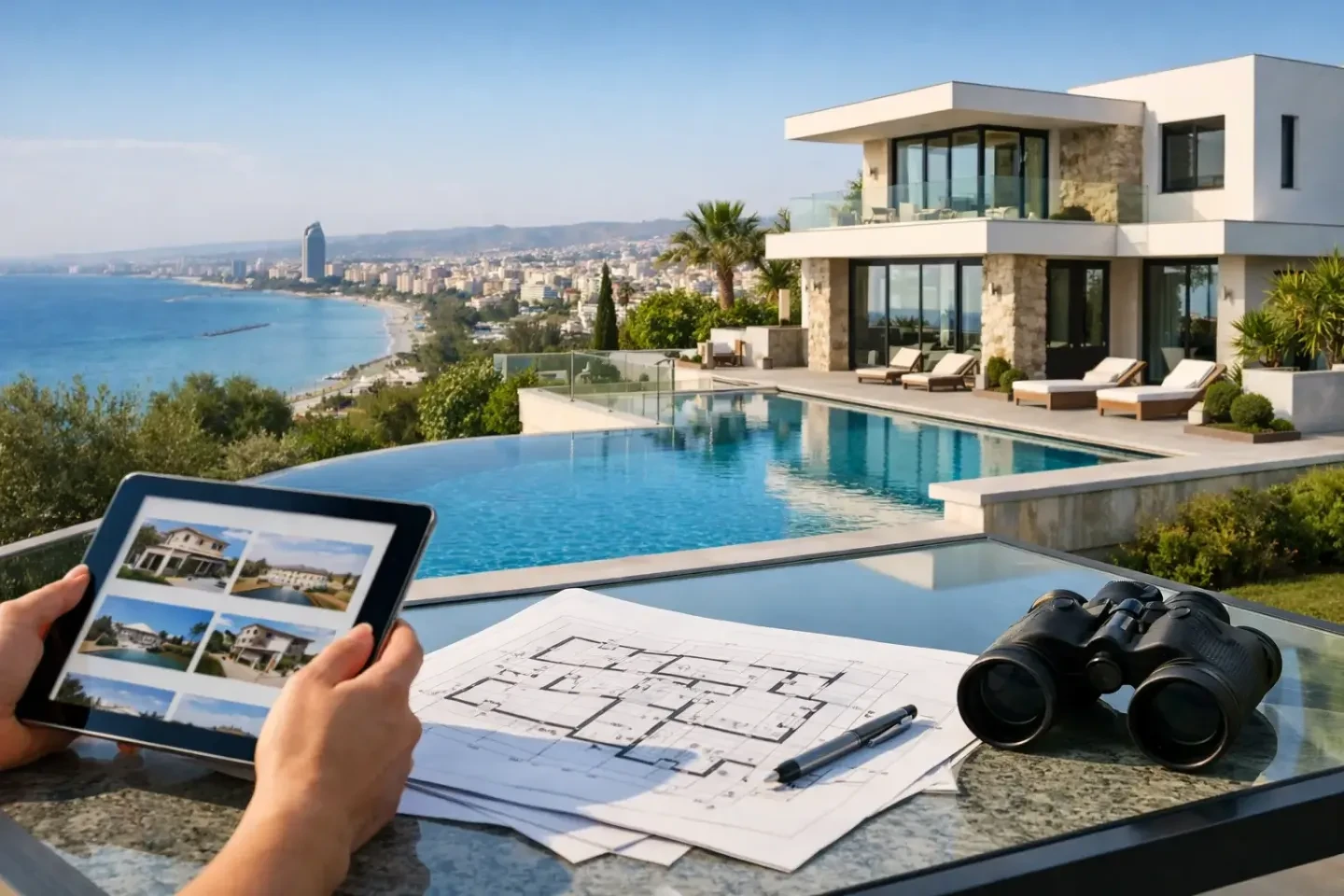
Searching houses for sale Limassol? Compare areas, prices, title deed status, build quality, and buyer costs before you make a move.
Limassol is one of those markets where two houses with the same bedroom count can lead to very different decisions. One may look well priced until you factor in renovation work, road access, and title deed timing. Another may seem expensive at first glance, but the location, plot size, and resale potential make the numbers more reasonable. That is why searching for houses for sale Limassol works best when you compare more than photos and asking price.
For buyers, Limassol is attractive for obvious reasons - coastline, business activity, international schools, and year-round demand. But it is also one of the most varied housing markets in Cyprus. A family house in Ekali, a modern villa in Agios Tychonas, and a village home on the outskirts all sit under the same broad search term, yet they serve very different budgets and lifestyles.
Limassol does not behave like a single uniform market. Coastal and central areas usually carry the highest prices, especially where access to the sea, schools, offices, or newer infrastructure is strong. As you move inland or toward less dense suburban zones, you may get larger plots, more privacy, and better value per square foot, but usually with a trade-off in commute time and immediate access to services.
This matters because many buyers start with a simple goal - buy a house in Limassol - and then realize they are actually choosing between very different use cases. A primary residence for a family has different priorities than a holiday house or a long-term investment property. If your search criteria are unclear, it is easy to compare listings that should not really be compared.
The first useful filter is not price. It is purpose. Are you moving full time, buying for part-year use, planning to rent the property out, or looking for long-term capital preservation? Once that is clear, the search becomes more efficient.
Different areas suit different buyer profiles, and the right choice often comes down to routine rather than prestige.
Agios Tychonas and nearby hillside areas are popular with buyers looking for larger homes, sea views, and a more private residential feel. These locations can work well for high-income professionals and international buyers, but pricing can rise quickly depending on view, age, and finish quality. Accessibility is important here. A house that looks close to the city on a map may still involve a longer daily drive.
Germasogeia remains a strong option for buyers who want a balance between residential life and access to the city. It attracts both local and international demand, which can support liquidity if resale matters to you. Yet even within Germasogeia, there is a meaningful difference between older residential streets and newer premium stock.
Ekali, Mesa Geitonia, and parts of Agia Fyla often appeal to families who want practical access to schools, shops, and central Limassol without paying top seafront pricing. In these areas, plot size, parking, storage, and road connections often matter more than luxury finishes.
Then there are village and semi-rural options around the Limassol district. These can offer more space and lower entry prices, especially for detached houses, but the trade-off may be age, renovation needs, and weaker short-term resale demand. For some buyers, that is acceptable. For others, it creates friction later.
When comparing houses for sale in Limassol, headline price can be misleading. Detached houses, semi-detached homes, and villas are priced differently not just because of size, but because of plot ownership, privacy, build quality, and location dynamics. A newer house on a smaller plot may outperform an older larger property if maintenance costs are lower and demand is broader.
Buyers should also watch how much of the value sits in the land versus the building. In stronger locations, plot value can support pricing even when the house itself needs work. In weaker or less liquid locations, a larger house does not always mean better value if demand is thin.
This is where structured listing data helps. Comparing covered area, plot size, year built, energy performance, condition, and exact micro-location gives a clearer picture than price alone. If one listing is priced above nearby comparables, there may be a valid reason. If not, that is worth questioning.
A good listing should answer more than marketing questions. Before arranging a viewing, look closely at the information quality. Missing basics often create delays later.
Start with title deed status. In Cyprus, this is one of the first things serious buyers need to understand. A house may have separate title deeds issued, title deeds pending, or a more complex ownership structure tied to a development. None of these automatically makes a property good or bad, but they do affect process, timing, and legal review.
Then look at construction age and renovation history. An older house in a good area may still be a strong option, but only if you price in upgrades properly. Roof condition, insulation, plumbing, windows, electrical systems, and moisture issues can turn an apparently fair purchase into a far more expensive one.
Parking, storage, outdoor space, and orientation also deserve more attention than they usually get. In a city like Limassol, practical usability matters. South-facing terraces, shaded outdoor areas, and decent parking can improve both everyday living and future marketability.
Some of the most expensive mistakes happen when buyers focus too much on finishes and too little on fundamentals.
One common issue is overpaying for cosmetic renovation. New kitchen cabinets and polished floors can distract from poor layout, low natural light, or structural wear. Another is underestimating slope, road noise, or neighboring development risk. A quiet house during a weekday morning viewing may feel very different in peak traffic or in summer.
Documentation gaps are another warning sign. If listing details are vague on permits, square footage, or ownership structure, treat that as a cue to ask more questions, not as a minor omission. Good property decisions rely on good data.
Foreign buyers and relocation users should also be realistic about distance. A house that feels close enough online may not suit daily school runs, office commutes, or regular access to services. Limassol traffic patterns can shift the experience of a location more than expected.
The most useful comparison is rarely between the cheapest and the nicest listing. It is between properties that solve the same problem.
If you are buying a family house, compare houses that offer similar school access, internal space, parking, and neighborhood function. If you are buying for part-time use, compare lock-up-and-leave practicality, maintenance exposure, and ease of access to the highway or coast. If investment matters, look at rental demand, resale liquidity, and whether the house appeals to a broad market or only a narrow niche.
At this stage, price per square foot can help, but only when the inputs are comparable. Covered verandas, basements, storage areas, and outdoor features are not always reflected consistently across listings. That is why buyers should avoid making fast assumptions based on one metric.
RERA’s approach to search is useful here because verified professional listings and structured property fields make comparison easier. Better listing quality does not remove risk, but it does reduce guesswork.
The purchase price is only one part of the total decision. Buyers should also budget for transfer-related costs, legal checks, financing costs if relevant, insurance, immediate repairs, and furnishing or renovation work. On older houses, post-purchase spending can be substantial even when the property is structurally sound.
If you need a mortgage, test affordability against realistic monthly costs rather than the maximum amount a bank may discuss. If you are relocating, think about near-term liquidity too. Buying a large house that stretches the budget may reduce flexibility later.
For international buyers, process timing matters as much as budget. Document collection, due diligence, financing coordination, and practical relocation planning all affect how smooth the purchase feels. A property can be attractive and still not be the right fit for your timeline.
The strongest buyers are not the fastest. They are the ones who define the brief clearly, compare like for like, and challenge weak listing information early.
In Limassol, the right house is usually not the one with the loudest pitch. It is the one where the price, area, documents, condition, and daily usability line up in a way that makes sense for your next five to ten years. If a listing looks promising, slow down just enough to test the details. Better search leads to better decisions, and in this market, that gap matters.

Planning to buy an apartment in Cyprus or looking for a rental property?
On RERA, you'll find 75,000+ up-to-date real estate listings across Cyprus – from studios and apartments to villas and commercial properties.