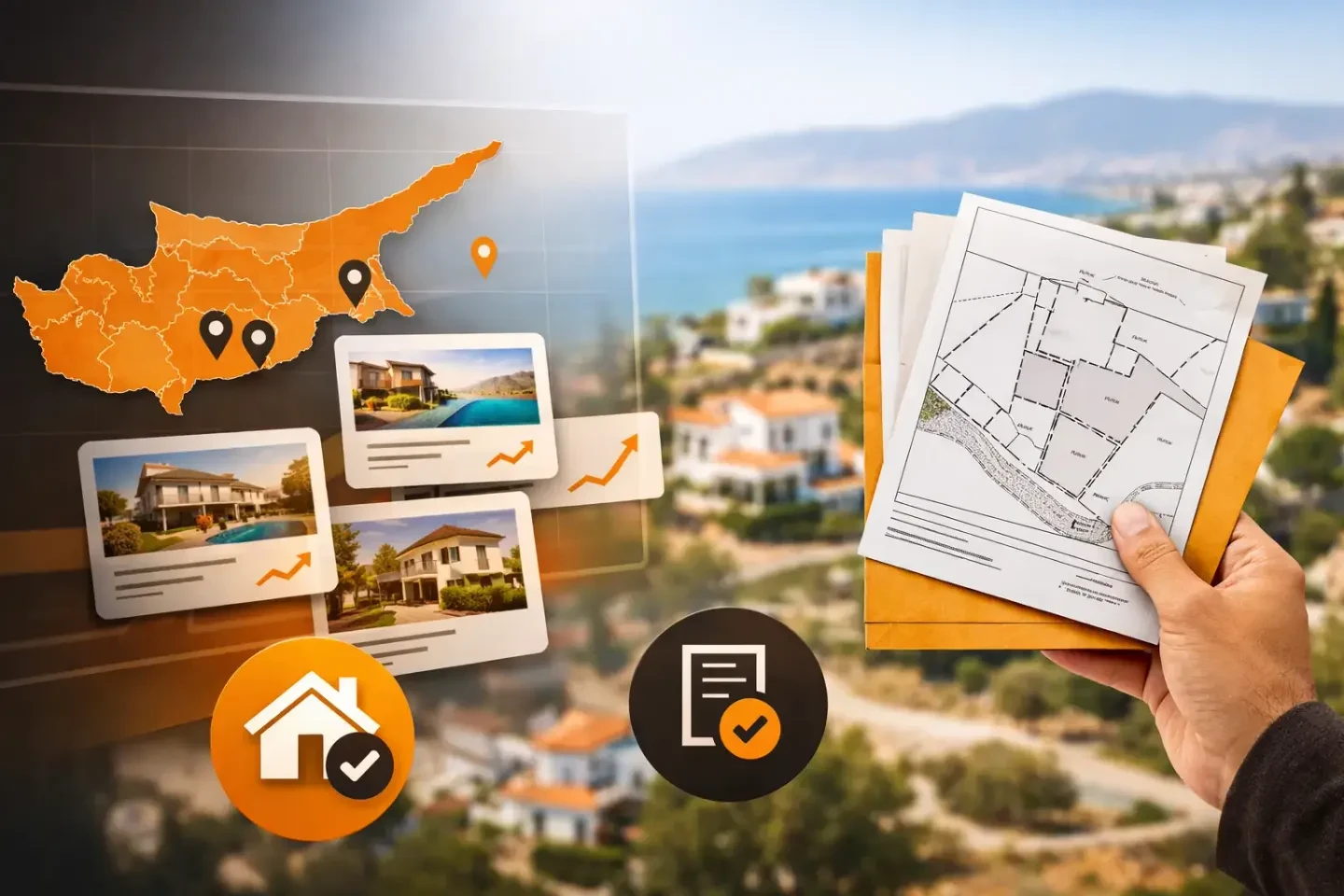
Find property for sale in Cyprus with title deeds and learn what deeds mean, what to check, where risks differ, and how to compare listings smarter.
A listing looks great until the paperwork starts asking harder questions. If you are searching for property for sale in Cyprus with title deeds, you are already focusing on one of the most practical filters in the market - and one that can save time, reduce uncertainty, and narrow your shortlist to properties with clearer ownership documentation.
That matters because buyers in Cyprus are not only comparing price, size, and location. They are also comparing legal readiness, transfer timelines, financing options, and resale flexibility. A property with title deeds is not automatically the right purchase, but it often gives buyers a more straightforward starting point than a property where deeds are pending or the ownership structure is more complex.
Title deeds are only one part of the buying decision. For the full checklist, read what to check before buying property in Cyprus.
In simple terms, title deeds are the formal ownership documents issued for a property. For buyers, they are a key part of confirming who owns what is being sold. In the Cyprus market, this distinction carries extra weight because not every property is in the same stage of legal and administrative completion.
When buyers specifically look for property for sale in Cyprus with title deeds, they are usually trying to lower transaction risk and avoid long periods of uncertainty after signing. This is especially relevant for foreign buyers, relocation buyers, and investors who want a cleaner path from search to ownership.
A property with title deeds can also be easier to evaluate from a financing and resale perspective. Banks, lawyers, and future buyers all care about documentation. If you plan to resell later, strong paperwork today often means fewer obstacles tomorrow.
Still, title deeds are not the only thing that matters. You should treat them as one important layer in a broader due diligence process, not as a shortcut that replaces checks on price, condition, planning status, common expenses, or area demand.
In real searches, this phrase can refer to a few different situations. Sometimes it means the property already has separate title deeds issued and ready for transfer. Sometimes sellers or agents use the phrase more loosely to signal that the ownership position is clear, even if buyers still need to verify the exact deed status.
That is why listing quality matters. Good listings should make it easier to understand whether you are looking at a resale apartment with separate deeds, a house on a clearly identified plot, or a unit in a development where deed timing may need closer review. Structured property data helps buyers compare these cases instead of treating all listings as equal.
For example, two apartments in the same area may have similar asking prices, but their value proposition can differ sharply if one has separate title deeds and the other does not. The second property may still be worth considering, but the buyer should expect a different risk profile, a different timeline, and possibly a different negotiation approach.
A title deed label on a listing is useful, but it should not end the conversation. Buyers should verify what exactly is being sold, whether the seller is the registered owner, and whether the property details in the listing match the legal documents.
If you are comparing options, focus on a few practical questions. Is the deed separate and available for transfer? Does the internal area, plot size, parking, storage, or share of land match the listing? Are there any charges, restrictions, or unresolved issues attached to the property? These are not reasons to panic. They are normal checks that help you move from online interest to an informed offer.
Condition also matters. A well-documented property can still be overpriced or need significant renovation. In some cases, buyers pay a premium simply because the paperwork feels safer. Whether that premium makes sense depends on your goals. An end user who wants a simpler purchase may accept it. An investor focused on yield may compare that premium against expected rent, renovation cost, and resale liquidity.
The importance of title deeds shows up differently depending on what you are buying.
For apartments, separate title deeds are often a major point of comparison because buyers are acquiring an individual unit within a wider building structure. Clarity around parking, storage, common areas, and the exact unit matters.
For houses, the focus often extends to the plot, boundaries, access, and any additions or modifications over time. Buyers should make sure the legal description aligns with the actual property on the ground.
For land, title deeds are central, but they are only part of the picture. Zoning, access, utility availability, shape, topography, and planning potential usually matter just as much. A clean deed does not automatically make a plot suitable for your intended use.
For commercial property, documentation can affect financing, leasing strategy, and exit options. Here, buyers typically need to look at both ownership documents and the income profile of the asset.
Demand for deed-ready property is strong across Cyprus, but the trade-offs vary by area. In Limassol, buyers often face higher prices and tighter competition, especially for well-located apartments and houses with clear documentation. The upside is liquidity. If a property is priced correctly, demand can be resilient.
In Nicosia, the market is often more utility-driven. Buyers may focus more on floor plan efficiency, commuting, school access, and long-term value than on coastal lifestyle factors. Here too, title deeds support confidence, but price discipline matters because local buyers tend to compare carefully.
In Paphos and parts of Larnaca, international demand can be a bigger factor. Buyers relocating from abroad may place even more weight on straightforward ownership paperwork because they want fewer surprises during the purchase process. In Famagusta district, including areas tied to seasonal demand, buyers may need to balance title deed clarity with questions about rental seasonality and long-term use.
That is why searching by area alone is not enough. A better search combines location with legal status, property type, budget, and realistic comparison data.
If your starting point is title deeds, that is sensible. But the next step is filtering for actual fit.
A practical comparison usually includes asking price, covered area, price per square meter, year built, renovation status, energy performance if available, and how long similar properties stay on the market. It also helps to compare several listings in the same micro-area rather than across different neighborhoods that serve different buyer profiles.
This is where a data-led marketplace adds value. Verified professional listings, structured fields, and cleaner property records make it easier to spot when one listing is missing key details or when a price sits above the local pattern without a clear reason. Better data does not make the decision for you, but it improves the quality of the shortlist.
For international buyers, this matters even more. When you cannot inspect every property in person right away, you need stronger filters at the search stage. A listing that clearly shows title deed status, property specifications, location context, and price positioning is more useful than ten vague listings with better photos.
One common mistake is assuming that title deeds alone mean there is nothing else to investigate. Another is rejecting every property without deeds, even when some may still be worth reviewing depending on timeline, discount, and professional advice.
Buyers also get into trouble when they focus too heavily on headline price. A cheaper property without clear documentation can turn into a slower, more stressful purchase. On the other hand, paying too much for a deed-ready property can reduce future upside. The right choice depends on your budget, risk tolerance, intended holding period, and whether you are buying for personal use or investment.
A third mistake is relying on incomplete listings. If a listing does not clearly state the ownership status, property specs, and core details, ask for clarification early. Better to eliminate uncertainty before you invest time in viewings and negotiations.
The best approach is not to treat title deeds as a marketing phrase. Treat them as a search filter that helps you define your buying criteria more clearly. If you want speed, cleaner transfer potential, and easier comparison, prioritize deed-ready properties. If you are open to more complexity in exchange for pricing flexibility, widen the net - but only with proper checks.
In practice, the strongest buyers are usually the ones who combine document awareness with market awareness. They understand what they are buying, how it is priced against nearby alternatives, and what risks are acceptable for their situation. On a platform like RERA, that means using better listing data to compare substance, not just presentation.
A good property decision in Cyprus rarely comes from finding the most attractive listing. It comes from finding the listing that still makes sense after the attractive part wears off.


Planning to buy an apartment in Cyprus or looking for a rental property?
On RERA, you'll find 65,000+ up-to-date real estate listings across Cyprus – from studios and apartments to villas and commercial properties.